Kamchatka. Tour to Kamchatka. Kamchatka tour. Trip to Kamchatka.
TOUR TO KAMCHATKA
TRIP TO KAMCHATKA PENINSULA
WELCOME TO KAMCHATKA

Kamchatka, often called “the land of fire and ice”, is one of Russia’s least explored but most scenically spectacular regions.
A 1000km-long peninsula separated from the mainland by the Sea
of Okhotsk, Kamchatka is hyperactively volcanic. It seems that the Creation hasn’t quite finished yet. The region can claim
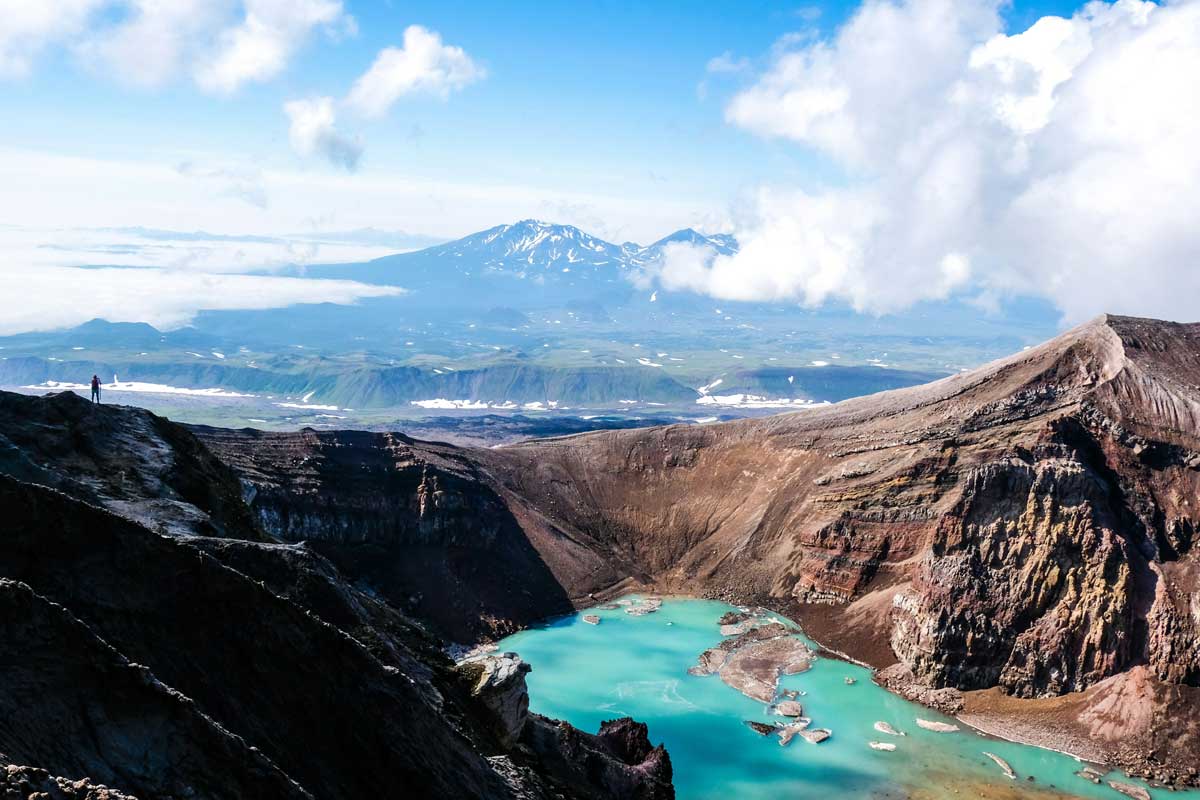
200 volcanoes in varying stages of activity, some long extinct, grassed over with aquamarine crater
lakes, while 20 or more rank among the world’s most volatile.
An unforgettable thing to see is a lava fields surrounding volcanoes that served as the testing grounds for Russia’s moon-walking
vehicles. The thermal activity deep below the earth’s surface also produces numerous hot springs, heated rivers
and geysers.
You should come to Kamchatka not only because you like to travel. Here you can also find health, understanding of the world and the
Universe, and peace of mind. Fire and ice, the action of boiling hot springs and waterfalls, blossoming meadows in the
middle of snow and ensembles of stone sculptures created by volcanic eruptions. Only after seeing all of this can we
understand what colors and what brilliant beauty the Earth hid from us after it became old and civilized.
Kamchatka, a peninsula comparable in size to Japan, is washed by the Pacific Ocean and the Bering and Okhotskoe Seas.
Kamchatka is very sparsely populated, averaging less than 1 person per square kilometer. Most of the inhabitants
live in the regional capital, Petropavlovsk, but a traditional way of life continues in the peninsula's many
scattered villages.
Kamchatka stretches from the North to the South for about 1,500 km. It occupies an area of 470,000 sq. km. There are two
mountain ranges - Sredinny and Vostochny in the central part of Kamchatka. The Central Kamchatka lowland is between them.
The climate of the Kamchatka peninsula is very peculiar and is influenced by the ocean and seas, by its unique
relief, and wind monsoons. Kamchatka’s climate is characterized by the diversity of climatic zones,
including maritime zone on the coasts, a continental zone in the central valley and an arctic zone in the
north of the peninsula.
Summer is a time of rapid growth and flowering as all of the flora and fauna hurries to complete a year’s
worth of activity before winter returns. Summer daylight hours are long. It can rain during summer and there may
still be snow on the ground, particularly on the altitudes. The summer average temperature is 10 to 20 degrees
Centigrade, while winter average temperature is 8 to 15 degrees Centigrade below the zero.
For natural phenomena, Kamchatka takes a special place among the rich and extraordinary nature of the world:
mountains, active and inactive volcanoes, geysers, vast valleys and lowlands. Fast rivers with rapids,
waterfalls and lakes made by tundra, estuary, glacier and lava. Low shores of the gloomy Okhotsk Sea
and abrupt bays of the boundless Pacific Ocean Trees and bushes pressed closely down by early frosts
and strong winds. Quickly growing but almost impassable thickets of bushes, and forests of slowly
growing stone birches. An abundance of grasses, sedges and related species, bogs and marshes.
A land, generous and severe, exposed to winds and floods, land of permafrost and fire-breathing
mountains.
The local flora is represented with some peculiarities of
gigantism of grasses (up to 3-3.5 m) and vertical vegetation zones. Vegetation
vertically changes from the foot to the top of mountains. Mountains feet are
taken by stone-birch (Erman Birch), ash-tree, cedar and alder bush, poplars. Dog
rose covers vast territories on coastal zones. There are a lot of tasty and
useful berries as honeysuckle, red bilberry, blue bilberry, mountain heath,
cranberry and others.
The flora encounters 60 species of mammals and 170 species of birds. The animals differ from those of the mainland by the
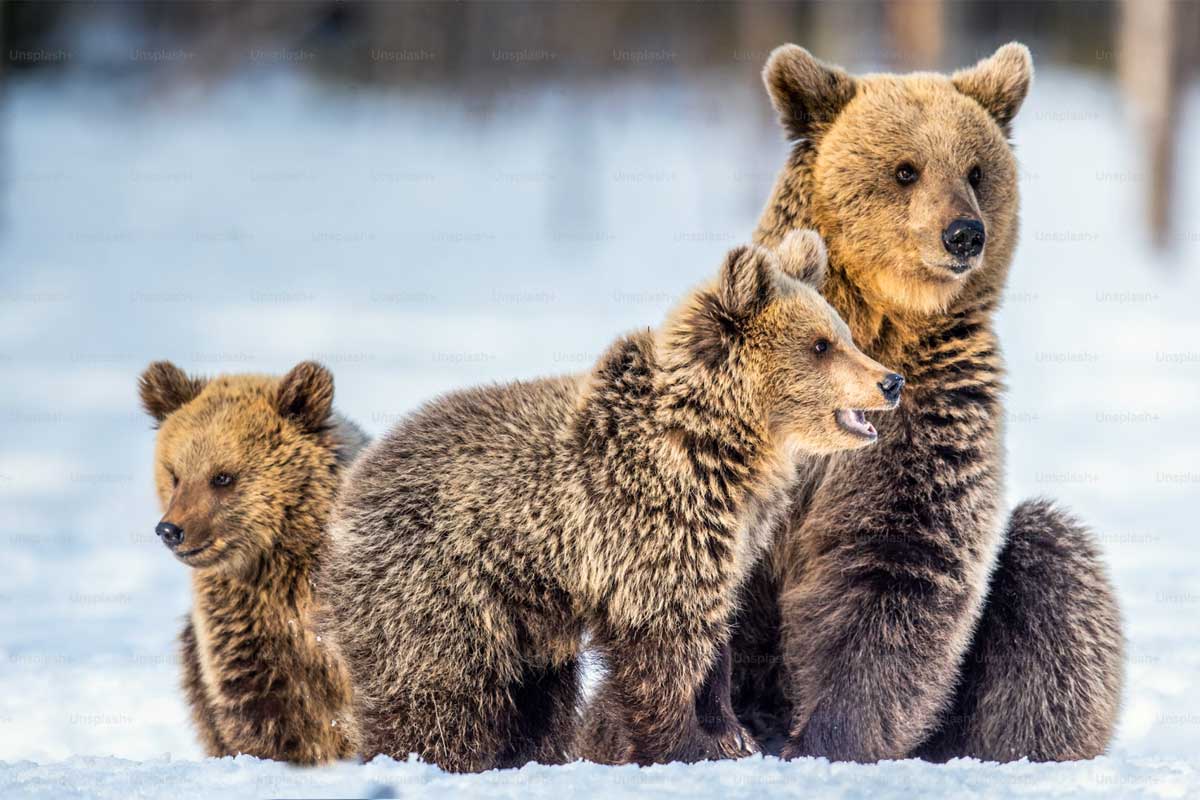
big size. For instance, a brown bear (about 700 - 1000kg weigh, 2,5 - 3m length) lives all over the peninsula. The
other representatives of local fauna are sable, hare, glutton or wolverine, polar fox, wolf, marmot, muskrat.
Canadian beaver, mink were settled on the peninsula for acclimatization. Lynx and squirrel migrated to
Kamchatka from the north in the beginning of the century. Wildlife is also presented here by such
animals as elk or moose with antlers of 5m widen, snow ram living only in the mountains, and never
descending lower than 600m.
Many kinds of birds present Kamchatka’s fauna: swans living
only in hot water or on the hot springs; bald eagle, golden eagle, ptarmigan,
willow grouse, capercaillie, cormorant, puffin, duck, gull, goose and others.
The salmon, the red gold, is one of the most important
economic factors on the peninsula. When in spring the salmon retreat from the
Pacific Ocean to their spawning grounds, it is a good sign for the bears as
well. The Kamchatka bear belongs to the biggest type of brown bear in the world.
In Kamchatka there are around eight thousand bears left - most of them live in
the southern part of the peninsula. The Kurilskoye Lake, on the southernmost tip
of the peninsula, is a paradise for bears. Throughout the entire summer hundreds
of bears romp about there and fill up on the salmon for the winter. Those clever
at fishing, awkward young animals, grouchy loners, curious bear cubs, anxious
mothers, cheeky adolescent bears- all need the salmon rich in calories so as to
have the strength to survive the cold winter in Kamchatka. In spite of this a
sufficient number of salmon reach their spawning grounds, where they make sure
they leave behind many descendants, before dying of exhaustion after the long
trip.
PAGES OF THE PICTURE ALBUM
|











 Tour to Kamchatka